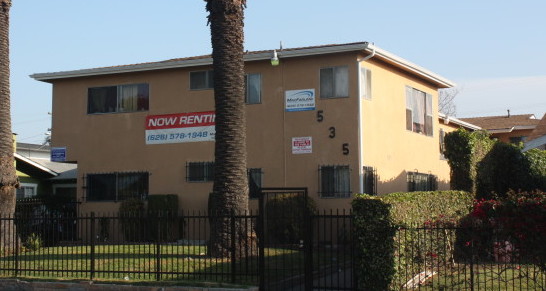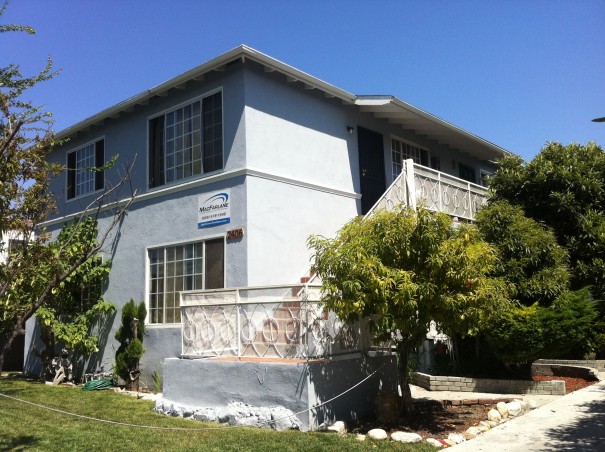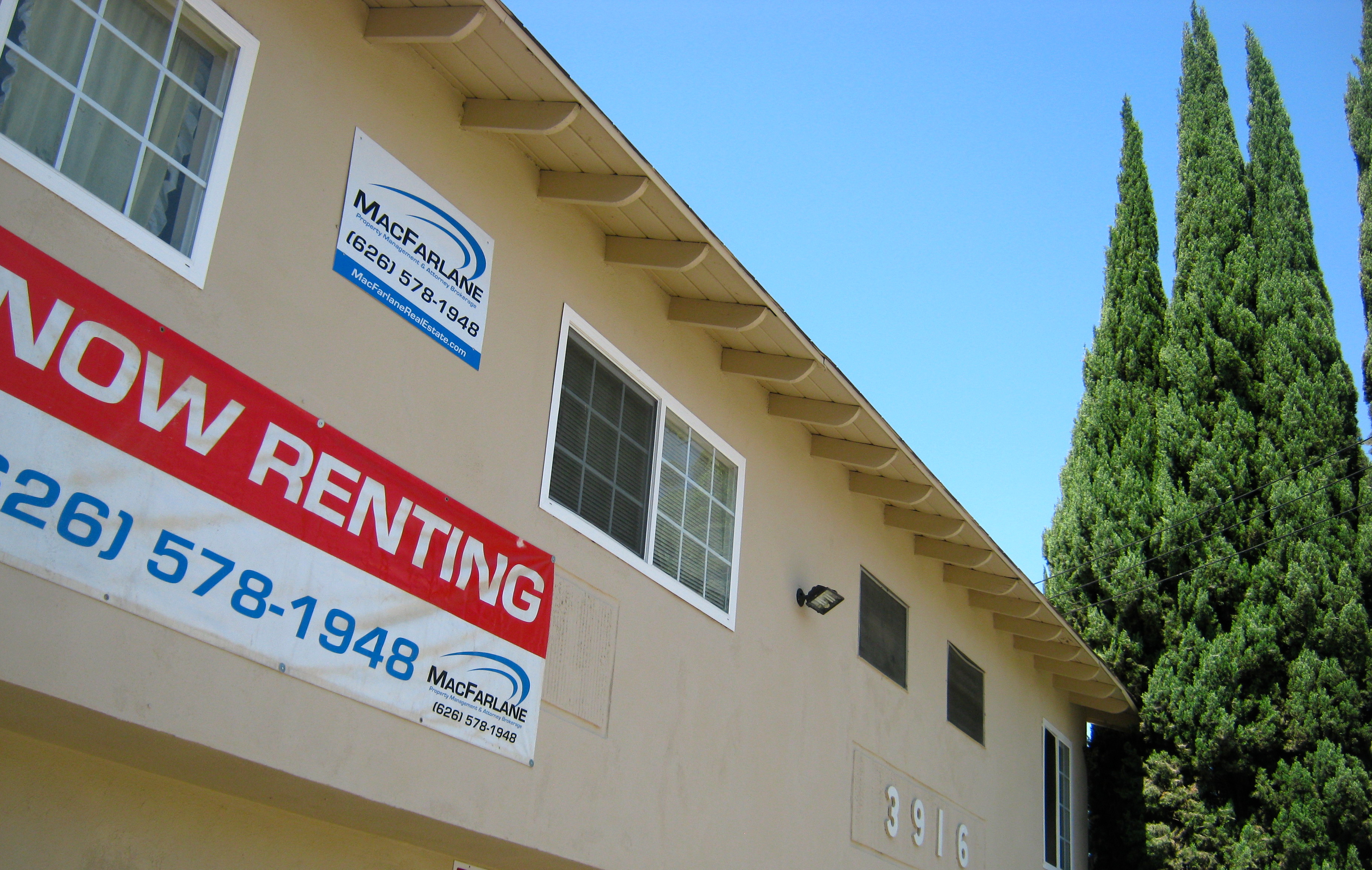
A common question in the minds of many property owners familiar with the Rent Escrow Account Program (REAP) is what are the REAP funds used for?  Many owners assume the funds will be used to assist with funding the rehabilitation work necessary at the property.  This is partially true; however, the property owner must meet certain qualifications before the money will be used for that purpose.  In addition, the Los Angeles Housing Department (LAHD) deducts a non-refundable administrative fee of $50.00 for each individual rent payment made to LAHD per month, per unit.

Below are scenarios where LAHD will consider the withdrawal of funds by the owner from the REAP account, upon review hearing by the LAHD General Manager (Los Angeles Housing Department - Rent Stabilization Ordinance - Section 1200.00, et seq.):

1. When such release is necessary to prevent a significant diminution of an essential service to the building, including utilities, trash services, security, pest control, and managerial services as required by state law.  When a request for such release is not supported by the tenants, the burden is on the landlord to show financial hardship preventing payment of such services beyond a mere negative cash flow for the property.

2. When necessary for the correction of deficiencies including, but not limited to, those that caused the building/unit(s) to be placed in REAP.  When a request for such release is opposed by the tenants, the burden is on the landlord to show financial hardship preventing the correction of deficiencies beyond a mere negative cash flow for the property.

Within twenty-one (21) days of receipt of a request for release of funds, the General Manager will hold a hearing to review the owner’s request.  In situations posing imminent health and safety threats, the General Manager may order the release of funds without a hearing or on shortened notice.

LAHD goes to great lengths to state that a request for release of funds shall not be considered if based solely on negative building cash flow or the owner’s inability to obtain a loan.  This leads property owners to believe that LAHD is more concerned with the overall financial capabilities of the property owner, as opposed to the financial condition of the specific property at issue.

REAP is a fairly new program and no substantial precedence has been set on this issue.  In short, it appears that LAHD is limiting its REAP account withdrawals to owners who are financially unable to proceed with the necessary repairs on their own.


No Comments | Category: REAP (Rent Escrow Account Program)

Once a property is formally accepted into REAP, an escrow account is established by the Los Angeles Housing Department (LAHD).  Rent payments from tenants of the property may be deposited into the escrow account.  Interestingly, the tenants are not required to pay their rent into the REAP escrow account.  However, the City of Los Angeles may seek a court order forcing the property owner to remand any rents received from the tenants while in REAP.  The City of Los Angeles can only seek this relief if: 1) the units have been in REAP for at least six months; and 2) an average of less than 50 percent of tenants in the building have been paying into REAP on a monthly basis.

Each month while the property is in REAP, LAHD will provide the property owner with an accounting for all rents paid into the REAP escrow account and any deductions.  Once a property is removed from REAP, a full accounting of rents paid into, and deductions taken from, the escrow account will be provided.  All rent money deposited into the escrow account and not expended will be returned to the legal owner of the property at the time the property is released from REAP.  If there is an ownership, foreclosure or control dispute and an objection to the release of the funds is filed, LAHD will retain the funds until the dispute is resolved either by court order or private agreement.

I will cover LAHD-mandated rent reductions while a property is in REAP and situations when a property owner is allowed to make withdrawals from the REAP escrow account in later posts.


No Comments | Category: REAP (Rent Escrow Account Program)

As mentioned in previous posts on the Rent Escrow Account Program (REAP), once a notice accepting the property into REAP has been mailed to the landlord, the property owner has fifteen (15) calendar days to appeal the REAP acceptance.  The appeal must be submitted on the appeal form provided by the Los Angeles Housing Department (LAHD) and must include the specific grounds for appeal and the names, current rents, and rent due dates of all tenants subject to REAP.  The property owner (appellant) must provide the specified amount of copies of the appeal request when submitting the appeal.  If no appeal is filed, the property is automatically accepted into REAP.

At the appeal hearing (often combined with the General Manager’s Hearing), typically the property owner, the tenants and any enforcement agency or other related party will be in attendance.  Parties are given the opportunity to present documents, written declarations and any other evidence relevant to the proceedings.  Preparation by the property owner in advance of the appeal hearing is crucial.  The hearing is a valuable opportunity for a property owner to tell their side of the story and potentially halt REAP acceptance.  Therefore, every effort should be made to present a thorough case.

The tenants and/or enforcement agencies may present proof that particular violations, although only discovered in potential units, are widespread and therefore additional units should be accepted into REAP.  Tenants and/or enforcement agencies will likely present photographs and reports produced during previous inspections of the property.

The property owner and/or his advocate may present proof that REAP is inappropriate because the violations at the property were caused by the tenants.  The property owner may also present justifications for avoidance of REAP based on the best interests, health and safety of the tenants.  The burden of proof falls on the appellant property owner to demonstrate his/her case by a preponderance of the evidence.

This is the property owner’s opportunity to enlighten the decision-maker.  The presentation must be fact-based, supported by evidence and to-the-point in order to be effectively persuasive.  Hiring an attorney to advocate on your behalf or at the very least provide guidance and assist in preparation for the hearing can be very helpful.


No Comments | Category: REAP (Rent Escrow Account Program)

First, this is not a football term.  In the legal universe, a receiver can be appointed by a government regulator pursuant to a statute, appointed by a court or appointed privately.  Under a receivership, the receiver undertakes custodial responsibility over another’s property, assets and rights.  The extent of the receiver’s duties and powers are stated in the appointment documents, be it a court order, a statute or private agreement.  Receiverships are most commonly utilized for: interim corporate management, marital dissolutions, fraudulent transfers, criminal profiteering, white collar crime and real property disputes.

The receiver is a neutral third party many times playing an interim role while a separate (likely underlying) dispute is resolved.  In the case of real property, receiverships are common and necessary.  Typically, when dealing with real property, the receiver is appointed by a court based on a property dispute that has reached the court system (i.e. health and safety code violations, foreclosure proceedings).

For instance, if an apartment owner is found to be in violation of health and safety codes and a court is convinced the apartment owner is not capable of solving the underlying problem on his/her own, a receiver may be appointed to take over the property.  While the property is under receivership, the receiver will oversee and coordinate rent collection, carry out maintenance and repairs to bring the property up to code with respect to the applicable health and safety laws and in doing so potentially secure an additional loan on the subject property to finance the required maintenance and repairs.  The receiver will typically hire a property management company under these facts.

The receiver, in the above example, does not work for the owner of the property nor does it work for the tenants or the tenants’ advocates.  The receiver is a neutral third party carrying out duties bestowed upon him/her by the court pursuant to a court order.  The receiver is a fiduciary and officer of the court and must oversee the property and assets according to the court’s directives.  The receiver will be obligated to report back to the court through comprehensive reports detailing the budget, progress, projections and goals.  Once the receiver completes the objectives of the court’s order and files a final report reflecting such, the receivership will be dismissed and the receiver shall be discharged from his/her duties.


No Comments | Category: Property Management, Receivership

Of course, an apartment owner’s main source of monthly income generated from the property will be rent collection. However, there are alternative ways to generate additional income that may just transform your investment from a “break-even” asset to a profitable one.

Laundry Income

Laundry machines on site will consistently drive more dollars per month to your investment. There are a handful of competitive and proven laundry companies that will not only service the machines and collect coins–but they will also provide the machines themselves and possibly pay you “door money” (dollar amount per unit) to sweeten the deal. Of course, these companies have to make their money as well. Typically, the laundry company has several profit-sharing plans it will offer depending on the size of the building.

Cell Tower Licensing

Another avenue for additional income is the issuing of a license or lease for a cellular tower to be placed on the property of an apartment or commercial building. The space consumed could be as small as 10′ by 10′. As we all know, cell phones are not going away and the required cell phone towers need a place to hunker down. Depending on the cellular company, it is not uncommon to receive an additional $750 to $1000 per month for the placement of a cell phone tower at a property.

No Comments | Category: Income Property, Property Management

After a property owner receives an Order to Comply from the Los Angeles Housing Department (LAHD) listing the deficiencies at the property and demanding the required repairs, the property owner has a certain allowable time to make the repairs.  If the property owner fails to make the repairs in a timely fashion, the property owner runs the risk of being accepting into the Rent Escrow Account Program (REAP).

Once a notice accepting the property into REAP has been mailed to the landlord, the property owner has fifteen (15) calendar days to appeal the REAP acceptance.  If no appeal is filed, the property is automatically accepting into REAP.  If an appeal is filed by the property owner, he/she will have until the date of their General Manager Hearing to attain compliance (IMPORTANT: the property owner must obtain an LAHD “sign-off” before the General Manager Hearing date to prevent the property from entering REAP).

After the General Manager Hearing, a decision will be issued determining whether the property will be accepted into REAP.  This decision may also be appealed.  This appeal must be filed by the property owners within ten (10) days of the General Manager’s decision (IMPORTANT: this appeal does not grant the property owner additional time to comply with the repair demands).

If the propery is accepted into REAP, the property owner must follow a detailed procedure and timeline to ensure compliance and eventual removal from REAP.  Most importantly, all cited violations must be repaired, as well as any other known or discovered deficiencies.  Once the repairs have been made, the property owner must contact the REAP offices at (213) 808-8500.  A REAP representative will determine over the telephone whether the property owner appears to be ready for removal from the program.  If so, the REAP representative will request that the Outreach Contractor assigned to the subject property schedule a site visit with the property owner.

During the site visit, the Outreach Contractor will issue either a positive or negative report.  A negative report naturally means that the repairs are not sufficient and the property is still in violation.  A positive report means that LAHD will request that the property owner contact the Case Manager assigned to the subject property to schedule a final inspection to obtain a potential “sign-off.”

Once a positive report and “sign-off” are obtained, REAP will review whether there are any other outstanding orders or failed inspections on file with Building & Safety, Department of Health Services or the Fire Department.  Also, the property’s Los Angeles Department and Water and Power bill must be paid in full.  If there are no outstanding order or failed inspections and the water and power bill is paid, REAP will make a recommendation to the Los Angeles City Council to remove the property from REAP program.

If City Council adopts to remove the property from the program, REAP will issue a 30-day notice formally closing the REAP account and restore the rents to their original levels.  After the property is removed by CIty Council, the property owner is responsible for paying all REAP administrative fees, inspection fees, systematic code enforcement fees, legal preparation fees and two pre-paid annual inspection fees.  If tenants have made deposits into the property’s REAP account, these monies will be used to cover these fees.  Once the fees are paid, REAP will prepare a termination document and send the paper work to the County Recorder’s Office.

Too often, property owners drag their feet as they are uninformed regarding the requirements and procedures of REAP.  What could realistically take a couple months, many times can last over six months or longer.  Property owners must educate themselves on the REAP process.  No property owner plans on being accepted into the program, however in the event it does occur, a property owner needs to be prepared and/or seek the guidance of someone knowledgeable in the field.

No Comments | Category: REAP (Rent Escrow Account Program)

As discussed in earlier posts, certain properties within the City of Los Angeles are subject to the Rent Stablization Ordinance (”rent control”).  Owners of such properties are limited as to why, how and when they can evict a tenant.  Below are the twelve legal reasons for evictions in the City of Los Angeles, as laid out in more detail in Rent Stabilization Ordinance Section 151.09:

1. Tenant has failed to pay rent which the landlord is entitled;

2. Tenant has violated a lawful obligation or covenant of the tenancy, other than the obligation to surrender possession upon proper notice, and has failed to cure such violation after having received written notice thereof from landlord;

3. Tenant is committing or permitting to exist a nuisance in or is causing damage to the rental unit, or to the appurtenances thereof, or to the common areas of the complex containing the rental unit, or is creating an unreasonable interference with the comfort, safety, or enjoyment of any of the other residents of the same or adjacent buildings;

4. Tenant is using or permitting a rental unit to be used for any illegal purpose;

5. Tenant, who had a written lease or rental agreement which terminated on or after the effective date of the Rent Stabilization Ordinance, has refused, after written request or demand by landlord to execute a written extension or renewal thereof for a further term of like duration with similar provisions and in such terms as are not inconsistent with or violate of any provision of the Rent Stabilization Ordinance or any other provision of law;

6. Tenant has refused the landlord reasonable access to the unit for the purpose of making repairs or improvements, or for the purpose of inspection as permitted or required by the lease or by law, or for the purpose of showing the rental unit to any prospective purchaser or mortgagee;

7. The person in possession of the rental unit at the end of a lease term is a subtenant not approved by the landlord;

8. The landlord seeks in good faith to recover possession of the rental unit for use and occupancy by:

a) the landlord, or the landlord’s spouse, children, or parents, provided the landlord is a natural person and not a corporation or partnership; or

b) for a resident manager, provided that: no alternative vacant unit is available for occupancy by a resident manager; except that where a building has an existing resident manager in order to replace her/him with a new manager;

9. The landlord, having complied with all applicable notices and advisements required by law, seeks in good faith to recover possession so as to undertake Primary Renovation Work of the rental unit or the building housing the rental unit, in accordance with a Tenant Habitability Plan accepted by the Department of Housing, and the tenant is unreasonably interfering with the landlord’s ability to implement the requirements of the Tenant Habitability Plan by engaging in any of the following actions:

a) Tenant has failed to temporarily relocate as required by the accepted Tenant Habitability Plan; or

b) Tenant has failed to honor a permanent relocation agreement with the landlord as established by the Rent Stabilization Ordinance;

10. The landlord seeks in good faith to recover possession of the rental units under either of the following circumstances:

a) to demolish the rental unit; or

b) to remove the rental unit permanently from rental housing use;

11. The landlord seeks in good faith to recover possession of the rental unit in order to comply with a governmental agency’s order to vacate, order to comply, order to abate, or any other order that necessitates the vacating of the building housing the rental unit as a result of a violation of the Los Angeles Municipal Code or any other provision of law;

12. The Secretary of Housing and Urban Development is both the owner and plaintiff and seeks to recover possession in order to vacate the property prior to sale and has complied with all tenant notification requirements under federal law and administrative regulations.

Note: Evictions under provisions #3 and #4 (when police reports and city attorneys are involved) and #8-12 require that a Landlord Declaration of Intent to Evict be filed with the Los Angeles Housing Department.

As is clear from reading the above-described twelve scenarios, the justifications for evictions in a “rent control” property in Los Angeles are fact-driven.  In addition, eviction proceedings related to a “rent control” property are highly scrutinized by tenant advocate groups and the Los Angeles Housing Department (LAHD).  Therefore, it is important for a “rent control” landlord to be wary of the law.

1 Comment | Category: Eviction, Los Angeles Rent Control

What is Rent Control?

The Rent Stabilization Ordinance (RSO), commonly referred to as “rent control”, was passed as an ordinance in 1978 to protect Los Angeles tenants from excessive rent increases, while at the same time, allowing landlords a reasonable return on their investments.

What Buildings are Covered under Los Angeles Rent Control?

Rent control covers properties within the City of Los Angeles, built before October 1978, that are apartments, condominiums, townhomes, duplexes, houses with two or more dwelling units on same lot, or a hotel, motel, rooming/boarding house room where tenant has stayed for 30 or more consecutive days. In addition, mobile homes or mobile home pads are covered under rent control if the park was issued a permit to operate before February 10, 1986.

What Properties are Exempt from Rent Control in Los Angeles?

1. Properties located in other municipalities or within unincorporated areas within the County of Los Angeles;

2. Single family dwellings, used as such;

3. Properties (except for mobile homes and mobile home pads) with a Certificate of Occupancy issued after October 1, 1978 (considered “new construction”);

4. Mobile homes or mobile home pads when the park was issued a permit to operate after February 10, 1986;

5. Government owned properties;

6. Units occupied by an owner or family member where no rents are collected;

7. Vacant units (10 days to register upon rental of property);

8. Properties permanently removed from the rental market;

9. “Luxury housing accomodations” issued an Los Angeles Housing Department (LAHD) certificate;

10. Demolished rent control properties;

11. Schools/hospitals;

12. Hotels/motels - with tenancy under 30 days; and

13. Non-profit owner units, with certain qualifications.

Each one of the above-listed scenarios can present difficult issues that should be examined closely.  If you believe your property may fall into one of the above categories, it is highly suggested you consult an attorney and confirm the findings with LAHD.

What is the Yearly Allowable Rent Increase for Rent Control Properties in Los Angeles?

As of July 1, 2008, the maximum percentage is 3%.  This percentage is tied to the Consumer Price Index and is calculated each year.

There are particular adjustments and potential exemptions related to this percentage, but generally the 3% figure is controlling.

On What Grounds Can a Tenant Be Evicted From a Los Angeles Rent Control Property?

Tenants may only be evicted for one of twelve reasons allowable under rent control laws (section 151.09).  I will list out and explain each of these twelve situations in a later post.  The reasons can be difficult to understand and vary considerably based on the specific facts.

What is “relocation assistance”?

Relocation assistance is required if a rental unit is under rent control and the landlord is evicting a tenant for his/her own occupancy or occupancy for his/her spouse, parents, children or for a resident manager.  Relocation assistance is also required for major rehabilitation and demolition, as well as orders from a governmental agency for a tenant to vacate due to a violation of the Los Angeles Municipal Code or any other provision of law.

For further information and more detailed explanations regarding Los Angeles rent control laws, the LAHD website provides helpful information.

1 Comment | Category: Los Angeles Rent Control

Apartment buildings are commonly described as “income properties.”  Unlike single family homes, apartment buildings (a sub-set of the multi-family property category) are almost exclusively valued based on the amount of income generated on a per-month basis.  Appreciation is a factor, but it is not as important when compared to rent collection and the related considerations (i.e. rent control issues, market rents in geographical area, vacancies).

There are two major valuation approaches used when considering the purchase of an apartment building income property: 1) Gross Rent Multiplier (GRM) and 2) Capitalization.

Gross Rent Multiplier (GRM): This approach establishes a number which, multiplied by the gross income of a property, produces an estimate value of the property.

Annual Gross Income MULTIPLIED BY Gross Rent Multiplier = Value

In many cases, an apartment building is listed for a price and the seller discloses the annual gross income and the gross rent multiplier.  Most potential buyers have a GRM in mind when shopping for deals.  With that GRM figure in mind, they will make offers on apartment buildings of interest.

Capitalization: This approach determines value by considering net income and percentage of reasonable return on the investment (known as “capitalization rate” or “cap rate”).  The value of the property is determined by dividing annual net income by the capitalization rate.

Annual Net Income DIVIDED BY Capitalization Rate = Value

No Comments | Category: Real Estate Brokerage (apartment buildings)

May an attorney who is also licensed as a real estate broker act in both capacities on behalf of a client in connection with the purchase of real property in California? The California State Bar said “yes” in a State Bar Ethics Opinion in 1982 (Formal Opinion No. 1982-69). Professional responsibility is not taken lightly by the California State Bar.  In this interesting opinion, the Standing Committee on Professional Responsibility and Conduct discusses the issues of an attorney’s duty of confidentiality, duty of loyalty, fee arrangements and advertising.

The Opinion establishes and demands a high level of ethical standards for a California attorney carrying out the dual role of attorney-broker.


No Comments | Category: Uncategorized